What a Thermostatic Mixing Valve Does
Every shower with a single handle that controls both temperature and flow has a mixing valve hidden in the wall behind it. Its job is simple: blend incoming hot and cold water to a target temperature and hold that temperature steady, even when something else in the house — a toilet flush, a washing machine cycle, a second shower running — suddenly pulls water from the same supply lines.
Without that valve doing its job, a drop in cold water pressure elsewhere in the home would send a surge of hot water straight to your shower head with no warning. That’s exactly the scalding-then-freezing pattern most homeowners describe when they call about this issue. Newer valves also include an anti-scald limit, which is a safety feature that prevents water from exceeding a set maximum temperature regardless of what’s happening elsewhere in the plumbing system.
Not every valve marketed as a “mixing valve” works the same way. Pressure-balancing valves respond to changes in water pressure but don’t actually sense temperature directly, while true thermostatic valves use a temperature-sensing element inside the cartridge to hold a set degree value even if pressure swings. Thermostatic models are generally more precise and are increasingly common in newer Oakville builds and renovated bathrooms, though plenty of older homes still run on pressure-balancing valves that behave similarly when they start to fail.

Common Signs Your Mixing Valve Is Failing
The pattern is usually pretty recognizable once you know what to look for. None of these symptoms on their own confirm a failed valve, but together they’re a strong indicator.
- Sudden temperature swings — water shifts from hot to cold (or the reverse) without you touching the handle
- Temperature changes when other fixtures are used — flushing a toilet or running the dishwasher noticeably affects your shower
- Handle feels loose or doesn’t hold its position — a sign the internal cartridge has worn down
- Reduced flow with normal temperature — scale buildup can restrict flow even when the valve is still regulating temperature correctly
- Water never gets fully hot — sometimes a sign the valve is stuck partway, rather than failing completely
If your shower has done this consistently for more than a week or two, it’s worth treating it as a plumbing issue rather than something that will resolve on its own. Worn valve components don’t repair themselves with time.
What Causes This Problem in Oakville Homes
A few different issues can produce the same hot-cold-switching symptom, which is part of why a proper diagnosis matters before replacing parts.
Worn internal cartridge. Most modern mixing valves use a replaceable cartridge that physically blends hot and cold water through a moving mechanism. Like any moving part, it wears down with years of use, and a worn cartridge often can’t maintain a stable blend anymore.
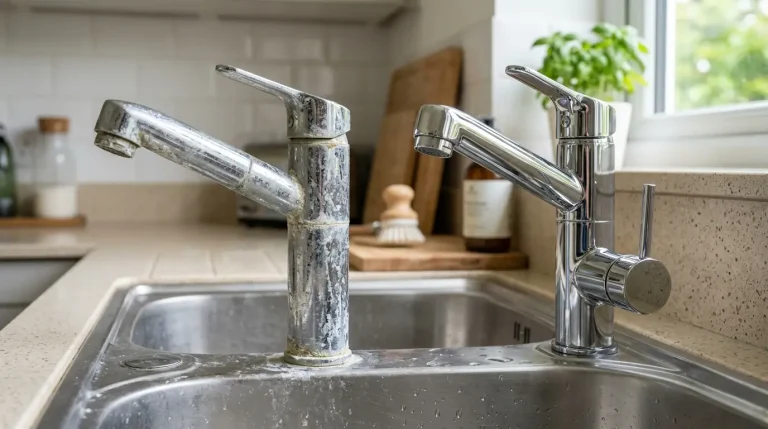
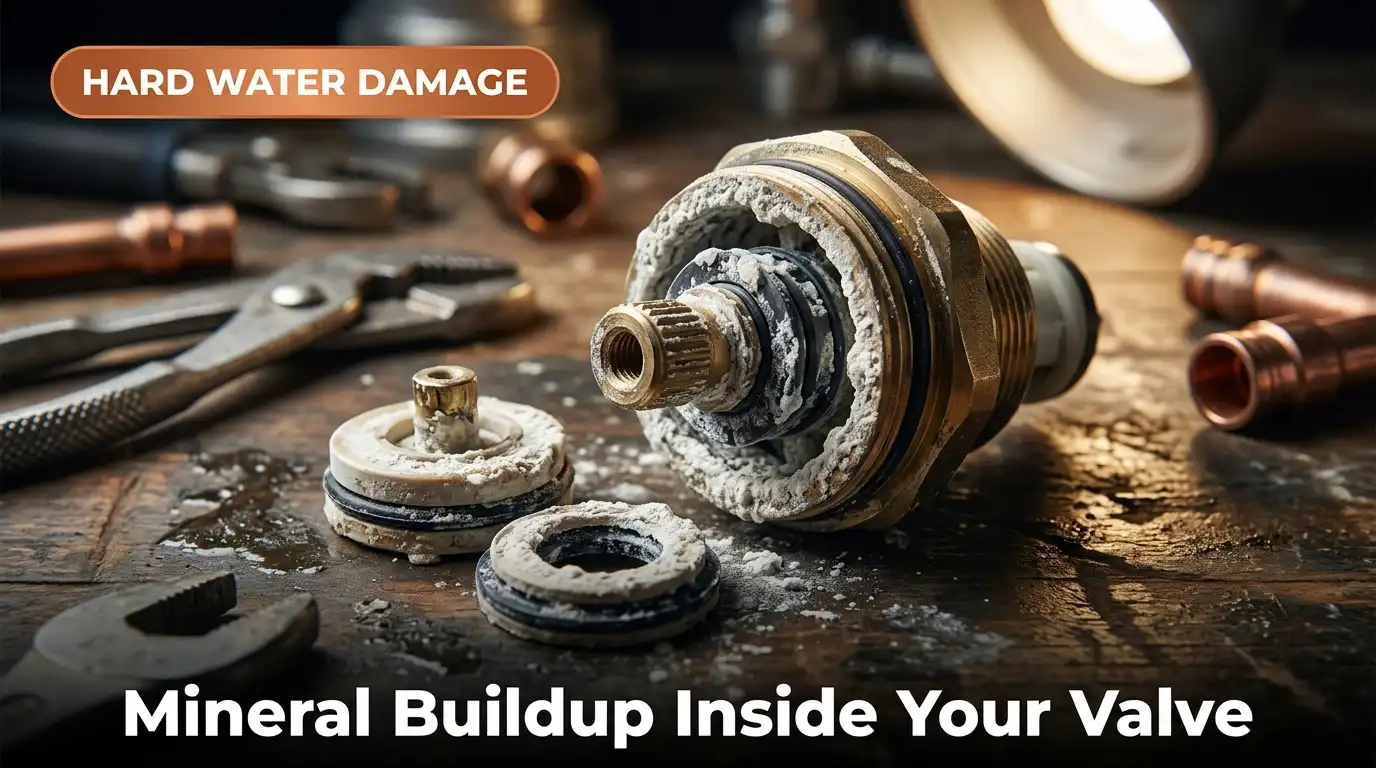
Mineral scale buildup. Oakville’s water hardness means calcium and magnesium deposits can build up inside the narrow channels of a mixing valve over time, the same way scale builds up in a kettle or water heater. That buildup can cause the valve to stick, respond slowly, or fail to regulate temperature accurately. If you’ve noticed scale on fixtures elsewhere in your home, it’s worth reading our guide on hard water in Oakville, since the same mineral buildup affecting your shower valve is often affecting other fixtures too.
Pressure imbalance between hot and cold lines. If your home’s cold water pressure is noticeably weaker than the hot side (or the reverse), the valve has to work harder to balance the two, accelerating wear. This is more common in older homes with smaller-diameter supply lines or partially closed shut-off valves somewhere in the system.
Water heater issues. Sometimes the mixing valve isn’t actually the problem — a failing water heater that can’t maintain consistent output temperature can produce very similar symptoms. This is worth ruling out before assuming the valve itself needs replacing, and it’s one of the first things a water heater repair visit would check.
Key Takeaways
- A mixing valve blends hot and cold water and holds a steady temperature even when other fixtures are in use.
- Sudden hot-cold switching is most often a worn cartridge, mineral scale, or a pressure imbalance.
- Hard water buildup is a common contributor in Oakville homes specifically.
- A failing water heater can mimic the same symptoms, so proper diagnosis matters before replacing parts.
- Most repairs are a same-day job once the actual cause is confirmed.
What You Can Safely Check Yourself
A few checks are safe for a homeowner to do without any plumbing experience, and they can help narrow down the cause before a plumber even arrives.
🚨 Do not attempt to open the valve body or remove the cartridge yourself unless you’re experienced with plumbing repairs. Incorrect reassembly can cause leaks inside the wall that aren’t visible until real damage has already occurred.
When to Stop DIY and Call a Licensed Plumber
The checks above are about gathering information, not fixing the valve. Once you’ve confirmed the pattern, it’s time to call a professional if any of the following apply:
- The temperature issue has lasted more than a week without improving
- Water occasionally runs uncomfortably hot, which is a safety concern, not just an inconvenience
- You’ve already confirmed shut-off valves are open and the problem persists
- The handle feels loose, grinds, or doesn’t return to a stable position
- Other fixtures in the home show the same hot-cold pattern, suggesting a water heater issue
For sudden total loss of hot water alongside the temperature swings, treat it as a priority call rather than something to schedule around — our emergency repairs team can usually get to Oakville homes the same day.
How Professionals Diagnose and Fix It

A licensed plumber typically starts by isolating whether the problem is the valve, the water heater, or supply pressure, since all three produce overlapping symptoms. From there, the fix usually follows a predictable path.
If the cartridge is worn, replacing it is usually straightforward and doesn’t require cutting into the wall, since most modern valve bodies are designed for cartridge access from the front. If mineral scale is the cause, the valve may be cleaned and tested first, though heavily scaled cartridges are often simply replaced rather than cleaned, since cleaning rarely restores full function once buildup has set in.
In cases where the valve body itself has failed, or the unit is old enough that replacement parts are no longer available, a full valve replacement may be the better long-term fix. This involves more work since it touches the plumbing behind the wall, but it also resolves the issue completely rather than treating a symptom. For broader pipe or fixture work connected to the repair, our team also handles general pipe fixing and replacement.
A thorough diagnosis usually also includes a quick check of static water pressure on both the hot and cold lines, since a meaningful gap between the two readings points toward a supply-side issue rather than the valve itself. This step takes only a few minutes but can save a homeowner from paying for a new cartridge when the actual fix is something simpler, like adjusting a partially closed shut-off valve elsewhere in the system. We serve homeowners dealing with this issue across Oakville and into nearby Burlington and Mississauga, and the diagnostic approach stays the same regardless of the home’s age or layout.
Cost Factors in Oakville
Pricing depends mainly on whether the fix is a cartridge swap or a full valve replacement, plus how accessible the valve is behind your shower wall.
| Repair Type | What Affects the Price |
|---|---|
| Cartridge replacement | Cartridge cost, brand, ease of access from the front |
| Full valve replacement | Wall access, pipe condition, valve brand and type |
| Diagnosis only (turns out to be water heater) | Often resolved alongside a water heater service call |
For a general sense of how plumbing service pricing works in Oakville, our plumber cost guide breaks down typical ranges across common repair types. A licensed plumber should always confirm an exact estimate on-site before starting work, since wall access and valve condition vary from home to home.
How to Prevent This From Coming Back
Once the valve is repaired or replaced, a few habits help it last longer the second time around.
- If your home has noticeable hard water, consider whether a whole-home water softener makes sense — less mineral buildup means less strain on every valve and fixture in the house
- Have shut-off valves checked periodically so they’re not accidentally left partially closed after other plumbing work
- Don’t ignore early hot-cold switching — catching it early often means a simple cartridge swap instead of a full valve replacement later
- If your water heater is aging, have it inspected alongside any valve repair, since the two systems affect each other
💡 Not sure if it’s the valve or the water heater? A licensed plumber can usually confirm the source of the problem during a single visit, often resolving both the diagnosis and the repair the same day. View our full range of plumbing services or request a free estimate to get started.
Frequently Asked Questions — Thermostatic Mixing Valves in Oakville
What is a thermostatic mixing valve and why does my shower need one?
It’s the component that blends hot and cold water to a set, stable temperature. Without it, your shower would be vulnerable to sudden temperature spikes whenever another fixture in the house draws water at the same time.
Why does my shower randomly switch between hot and cold?
The most common cause is a worn internal cartridge that can no longer hold a steady blend, though mineral scale buildup and pressure imbalance between hot and cold supply lines are also frequent causes, especially in Oakville’s hard water conditions.
Can I fix a thermostatic mixing valve myself?
Basic checks, like confirming shut-off valves are open, are safe to do yourself. Actually opening the valve body or replacing the cartridge is best left to a licensed plumber, since incorrect reassembly can lead to leaks inside the wall.
How much does it cost to repair a mixing valve in Oakville?
Cost depends on whether the fix is a cartridge replacement or a full valve replacement, plus how accessible the valve is behind your shower wall. A licensed plumber can confirm an exact estimate after inspecting your specific setup.
Is a sudden hot water spike in the shower dangerous?
It can be, particularly for children and older adults. If your shower has produced uncomfortably hot water unexpectedly, treat it as a priority repair rather than something to wait on.
How do I know if it’s the mixing valve or my water heater causing the problem?
If the temperature issue only happens in one shower, the valve is the more likely cause. If multiple fixtures throughout the home show similar inconsistency, the water heater is worth checking first.
How long does a mixing valve repair take?
Most cartridge replacements are completed in under an hour once a plumber is on-site. A full valve replacement that requires wall access takes longer but is still typically a same-day job.
Does hard water make this problem worse in Oakville?
Yes. Mineral buildup from hard water can accelerate wear inside a mixing valve’s narrow channels, which is one of the reasons this issue tends to show up more often in homes with noticeable scale on other fixtures.
Shower Temperature Acting Up?
Free Estimate · Licensed & Insured · Same-Day Service Available
📞 Call (365) 808-5310