Hard Water Oakville: Protect Your Pipes, Fixtures and Appliances
Oakville Home Plumbing GuideIf you live in Oakville and keep seeing chalky white crust on faucets, cloudy shower glass, spotty dishes, or a water heater that rumbles during heating, you may be dealing with hard water Oakville homes commonly experience. These problems are usually caused by dissolved calcium and magnesium minerals that leave scale behind as water moves through your plumbing system.
This guide explains what hard water means, how it affects pipes and appliances, what you can safely check yourself, and when it makes sense to call a licensed plumber for local help.
Hard water is water with higher levels of calcium and magnesium. In Oakville homes, it can leave limescale on fixtures, reduce water heater efficiency, clog small valves, and make soap harder to rinse away. It is usually safe to drink, but it can be tough on plumbing, appliances, cleaning routines, and comfort.
Key Takeaways for Oakville Homeowners
- Hard water is not the same as unsafe water — it is mainly an aesthetic and plumbing-performance issue.
- Scale builds slowly. White crust on taps today can point to mineral buildup inside fixtures, valves, and hot-water equipment.
- Water heaters feel the impact first, since sediment and mineral scale make the unit work harder and shorten its useful life.
- Safe DIY checks are simple — aerators, shower heads, kettle elements, dishwasher spots, and water heater noises.
- If pressure is dropping, leaks appear, or appliances fail early, a licensed plumber can confirm whether scale or another issue is the cause.
- What Hard Water Means for Oakville Homes
- Common Signs You Have Hard Water
- How Hard Water Affects Pipes and Fixtures
- Why Water Heaters and Appliances Suffer First
- What Hard Water Does to Cleaning, Skin, and Hair
- Safe DIY Checks Before You Call a Plumber
- Water Softener and Treatment Options
- Cost Factors for Hard Water Solutions
- When Hard Water Becomes a Repair Issue
- Areas We Serve Near Oakville
- Frequently Asked Questions
What Hard Water Means for Oakville Homes
Water becomes hard when it carries dissolved minerals, mainly calcium and magnesium. These minerals are commonly measured as milligrams per litre of calcium carbonate, and the number can vary by source, distribution zone, season, and the plumbing inside your own property — so the best reading for your home comes from a simple water hardness test.
Health Canada explains that hardness is commonly classified from soft to very hard, and that water softeners are a household-level option when a homeowner wants to reduce hardness, calcium, and magnesium. It also notes that hardness can form scale inside hot-water pipes and water-heating appliances, especially where heat changes how minerals behave in the water.
That is why hard water in Oakville is usually noticed in practical ways: chalky residue, more soap use, reduced fixture flow, dishwasher spots, and water heater sediment. The minerals themselves are not usually a drinking-water safety concern for municipal water users, but the buildup they leave behind can become expensive if it is ignored for years.
| Hardness Level | Common Range | What Homeowners Notice |
|---|---|---|
| Soft | 0–60 mg/L | Low scale, easy soap lather, fewer fixture deposits |
| Moderately hard | 61–120 mg/L | Some spotting and mild scale over time |
| Hard | 121–180 mg/L | Noticeable scale on fixtures, kettles, dishwashers, and water heaters |
| Very hard | 180+ mg/L | Heavier mineral buildup, more frequent appliance and fixture concerns |
💡 Local note: Published hardness values can vary depending on the reporting source and distribution zone. For the most accurate answer, test water at your own tap, especially before buying a softener or changing plumbing equipment.
Common Signs You Have Hard Water in Oakville
You do not need lab equipment to spot early warning signs. Most homeowners first notice hard water in areas where water dries on a surface or gets heated. The problem is easy to dismiss as cleaning residue, but repeated scale usually points to a mineral issue rather than poor housekeeping.
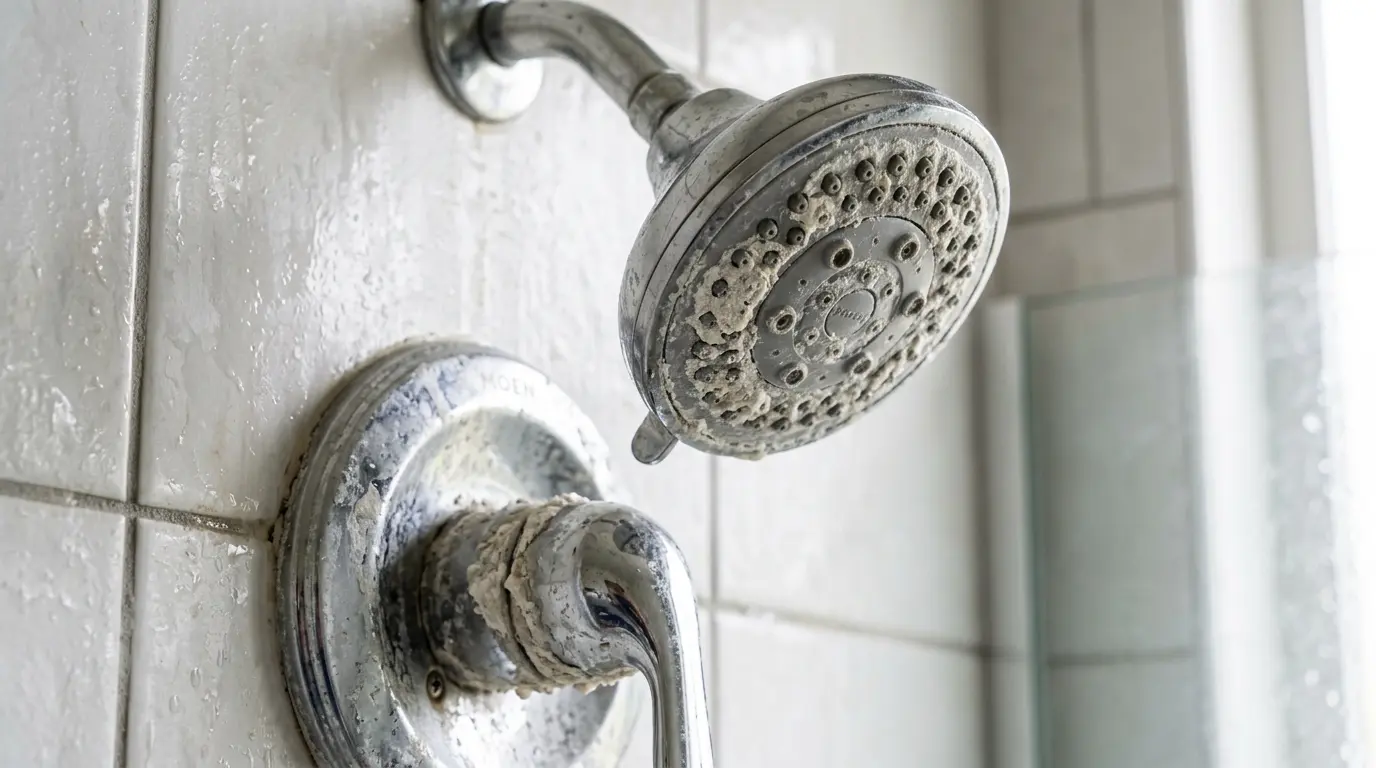
- White scale — chalky crust around tap bases, shower heads, kettle elements, and faucet aerators
- Spotty dishes — cloudy glasses or dishes that look dirty even after a normal dishwasher cycle
- Lower flow — shower heads and faucets that slowly lose pressure as small openings collect scale
- Soap that won’t lather — along with laundry that feels stiff or dry-feeling skin after showering
- A water heater that pops or rumbles — and fixture cartridges that wear out faster than expected
If slow drains or backups are also happening, the issue may involve more than hard water. In that case, a professional drain cleaning Oakville inspection can confirm whether you are dealing with mineral scale, grease, roots, or a deeper blockage.
How Hard Water Affects Pipes and Fixtures
Inside your plumbing system, mineral scale forms in thin layers. One layer is not a crisis. The problem is repetition. Every time hard water passes through a pipe, valve, faucet, or appliance, a little more residue can stay behind. Over many years, that residue may narrow small openings, make valves harder to turn, and reduce the flow you feel at the tap.
Older homes can be more sensitive because the plumbing may already have corrosion, older pipe materials, or previous repairs. If you live in an established Oakville neighbourhood and notice lower flow in several fixtures, the cause may not be the shower head alone — the restriction might be inside supply lines, shut-off valves, pressure regulators, or fixture cartridges.
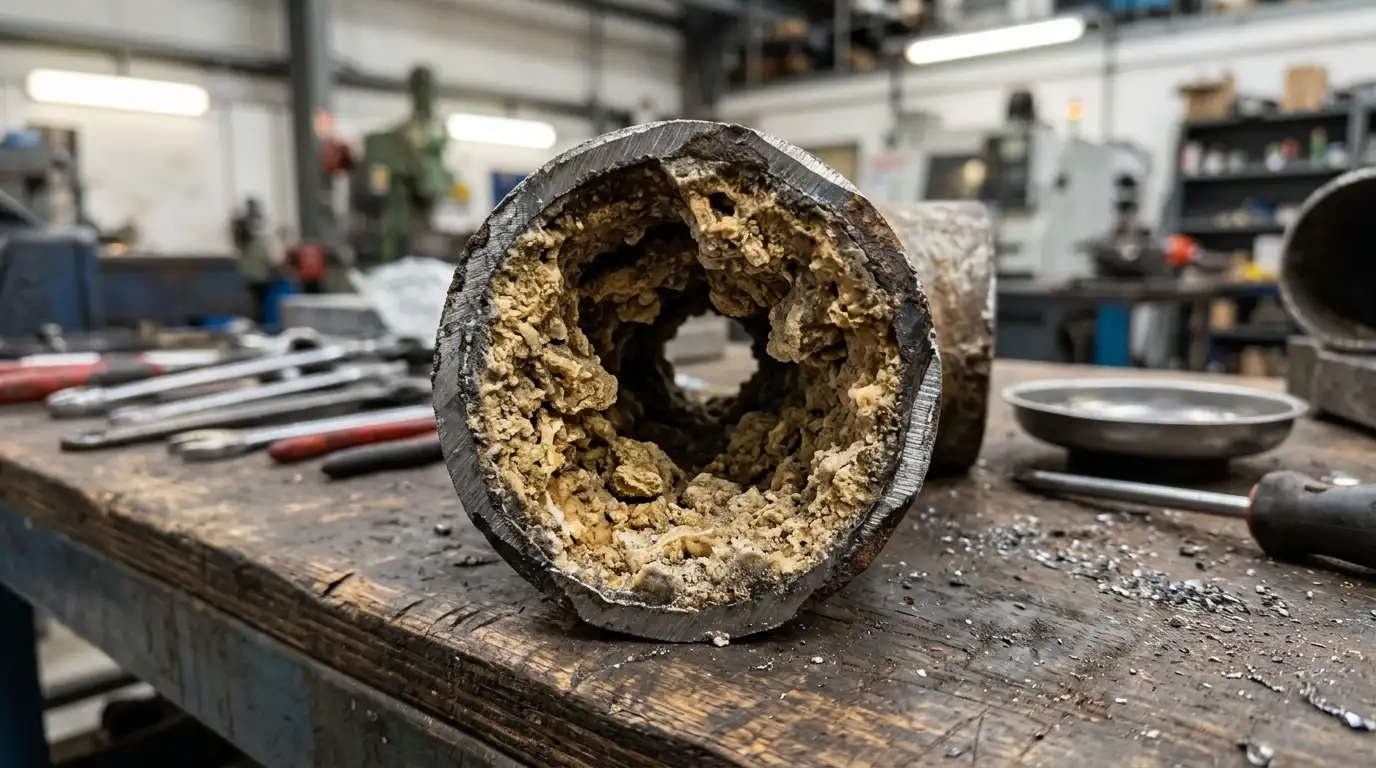
Hard water can also make leaks harder to understand. Mineral crust may temporarily hide a slow seep around a joint, while corrosion continues beneath the surface. If you notice stains on ceilings, damp cabinet floors, bubbling paint, or musty odours with no obvious source, book professional leak detection before the damage spreads.
Why Water Heaters and Appliances Suffer First
Hard water usually creates the most expensive problems when heat is involved. When water is heated, minerals are more likely to settle out and collect as sediment. That is why kettles, dishwashers, washing machines, and water heaters often show symptoms before other parts of the home.
In a tank-style water heater, minerals can settle at the bottom of the tank. Over time, that layer can make heat transfer less efficient. The unit may need to run longer to heat the same amount of water, and you may hear popping or rumbling as trapped water and mineral deposits react to heat. If your hot water runs out faster than normal, takes too long to recover, or the tank is noisy, schedule a water heater repair check before assuming replacement is the only answer.
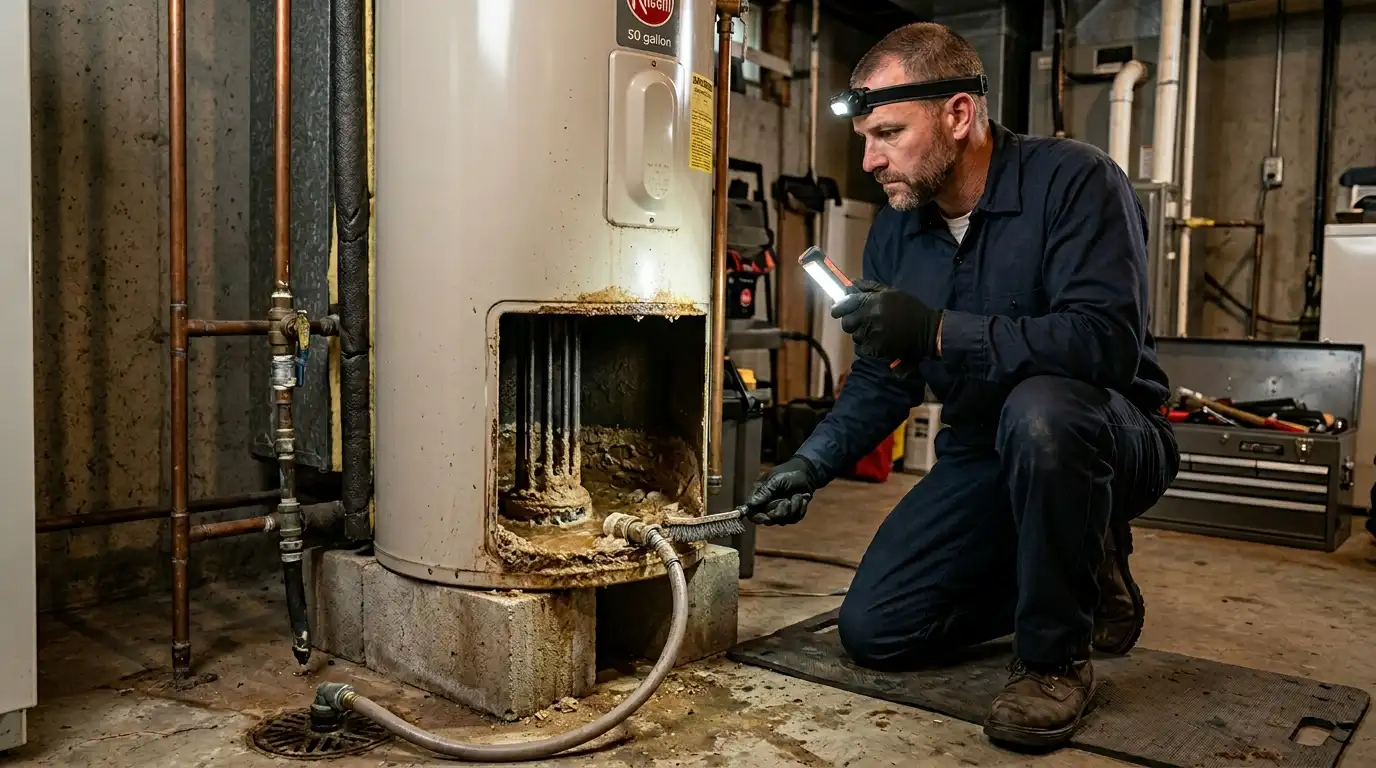
Dishwashers and washing machines also suffer because hard water reacts with detergents. That can leave cloudy glassware, film on dishes, stiff fabrics, and extra residue inside the machine. Refrigerator ice-maker lines are another weak point because narrow tubing can clog faster than larger supply lines.
🚨 Do not open a water heater, remove parts, or flush a tank if you are unsure how to shut off power, gas, or water safely. Call a licensed plumber when heating equipment is noisy, leaking, rusty, or not producing reliable hot water.
What Hard Water Does to Cleaning, Skin, and Hair
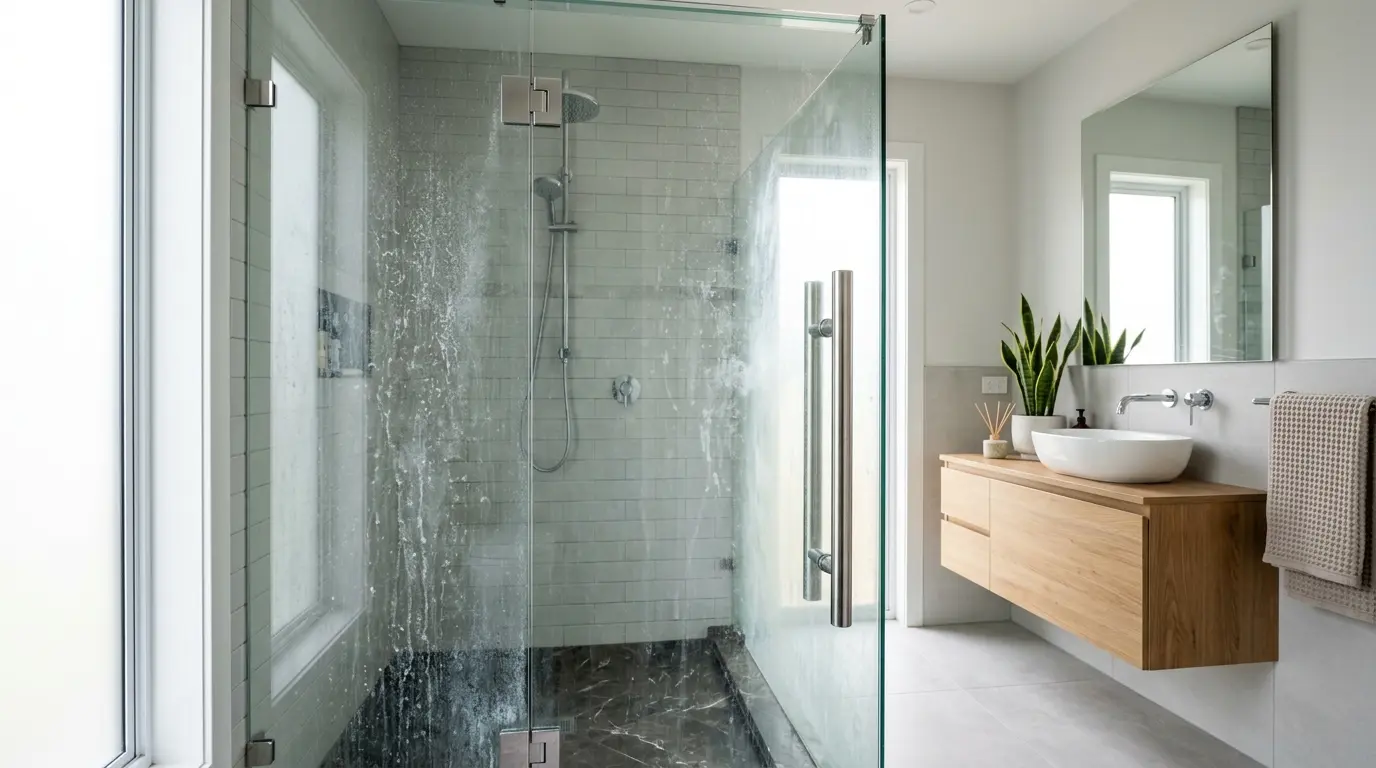
Hard water changes how soap behaves. Instead of rinsing cleanly, soap can react with calcium and magnesium to create a residue often described as soap scum. In bathrooms, that residue sticks to tile, glass, tubs, and fixtures. On skin and hair, it can leave a dry or coated feeling after showering.
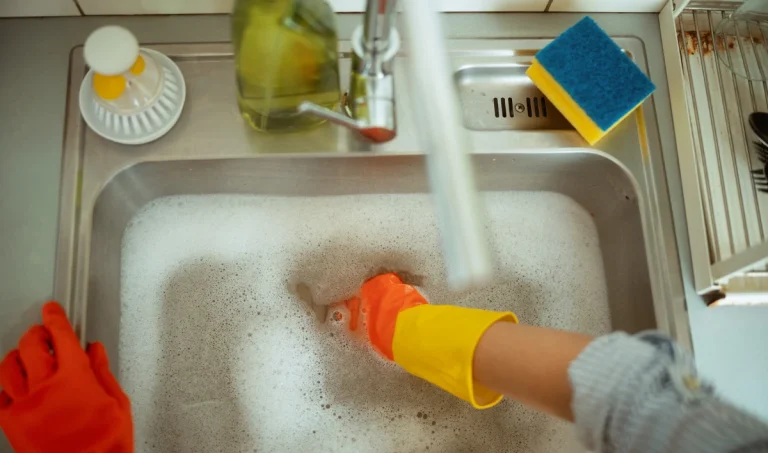
For many families, this shows up as more cleaning time. Shower glass turns cloudy faster, faucets need frequent descaling, toilets may develop mineral rings, and grout can look dull. You may also find yourself using more shampoo, more detergent, and stronger cleaners to get the same result.
Hard water is not the only possible cause of dry skin or dull hair, so avoid treating it like a medical diagnosis. Still, if your home has obvious scale and everyone notices a coated feeling after showers, reducing mineral buildup may improve comfort and make cleaning easier.
Safe DIY Checks Before You Call a Plumber
Before booking service, you can do a few safe checks that help narrow the problem. These steps do not require opening walls, cutting pipes, or touching electrical equipment.
If you find low pressure throughout the home, repeated leaks, water stains, or old valves that no longer close properly, stop DIY troubleshooting and ask for a professional inspection. Our team can review the issue through the relevant plumbing services and explain the next step clearly.
Water Softener and Treatment Options
The right solution depends on the hardness reading, your plumbing layout, family size, appliance age, and comfort goals. A whole-home water softener is the classic option because it treats water before it reaches most fixtures and appliances. Salt-based softeners use ion exchange to reduce calcium and magnesium, which helps limit scale.
Salt-free conditioners are another option. They do not remove hardness minerals the same way a salt-based softener does, but they may reduce how scale sticks to surfaces. Reverse osmosis systems are usually installed at a single drinking-water tap and help with taste and filtration, but they do not protect every pipe, shower, dishwasher, washing machine, or water heater.
| Option | Best For | Important Note |
|---|---|---|
| Salt-based softener | Whole-home hardness reduction | Needs salt and periodic maintenance |
| Salt-free conditioner | Lower-maintenance scale control | Conditions minerals; does not remove them like ion exchange |
| Reverse osmosis | Drinking-water tap quality | Point-of-use system, not whole-home pipe protection |
| Fixture descaling | Short-term cleaning | Helps appearance but does not solve source hardness |
Cost Factors for Hard Water Solutions in Oakville
Costs vary because every home is different. A plumber or water-treatment professional will consider the size of the home, number of bathrooms, water usage, hardness level, available utility-room space, drain access for regeneration, existing shut-off valves, and whether old piping needs repair before installation.
For plumbing-related hard water damage, the cost also depends on what failed — replacing a clogged faucet cartridge is very different from repairing a leaking supply line or replacing a water heater affected by years of sediment. If your concern is budget planning, our Oakville plumber cost guide is a useful resource before you request a quote.
💡 Be careful with one-size-fits-all pricing. A cheaper system that’s undersized for your home can regenerate too often, waste salt, or fail to protect the fixtures you care about. A proper estimate should explain equipment size, installation needs, maintenance expectations, and what’s included.
Not Sure If Hard Water Is Causing the Problem?
Free Quote · No-Pressure Inspection · Licensed & Insured
📞 Call (365) 808-5310When Hard Water Becomes a Plumbing Repair Issue
Hard water itself is not usually an emergency. The emergency happens when scale, corrosion, sediment, or weakened parts lead to a leak, blockage, failed valve, or broken hot-water equipment. You should call a plumber quickly if you notice water around the heater, rusty water, active dripping, stains that spread, sewer smells, a backed-up drain, or a shut-off valve that will not turn.
For urgent leaks, burst pipes, blocked drains, or no hot water, our emergency plumbing repairs team is available. If hard water has contributed to damaged piping, our pipe fixing and replacement service can inspect the affected area and recommend repair before a small issue becomes a larger restoration job.
Homeowners dealing with basement flooding or sewer backup concerns may also want to read our guide on backwater valve installation in Oakville. Hard water and sewer protection are different issues, but both are part of protecting the home from preventable water damage.
Areas We Serve Near Oakville
Oakville Plumbing Pro serves homeowners and businesses across Oakville and nearby communities, including Glen Abbey, Bronte, Downtown Oakville, Joshua Creek, Clearview, Burlington, and Mississauga. Hard water symptoms can appear in condos, townhomes, detached homes, older properties, and small commercial spaces, so local context matters when inspecting fixtures, heaters, and piping.
Hard water can overlap with several plumbing symptoms. For more help understanding what’s happening before booking service, see our guides on leak detection for stains and hidden water damage, water heater repair for rumbling tanks or sediment concerns, and drain cleaning signs for slow drains and repeated clogs.
Frequently Asked Questions About Hard Water Oakville
Is hard water in Oakville safe to drink?
Municipal water hardness is usually considered a quality and comfort issue, not a drinking-water emergency. The minerals involved are mainly calcium and magnesium. If you have taste, odour, private well, or health-specific concerns, check current municipal information or request a water test.
What is the easiest way to test hard water at home?
A water hardness test strip is the easiest first step. Run the test at a frequently used tap and compare the colour to the kit chart. For equipment decisions, a professional test is better because it can be reviewed alongside your plumbing layout and symptoms.
Can hard water damage my water heater?
Yes, hard water can contribute to sediment and mineral scale inside water heaters. This may reduce efficiency, create popping or rumbling sounds, and add stress to the unit. A licensed plumber can inspect the heater and tell you whether flushing, repair, or replacement is the right next step.
Do I need a water softener for hard water Oakville problems?
You may benefit from a water softener if testing confirms hard water and you are seeing scale, appliance issues, dry-feeling residue, or repeated fixture problems. The right choice depends on your hardness level, budget, maintenance preference, and home plumbing setup.
Will a softener fix low water pressure?
A softener can help prevent future scale, but it may not reverse existing restrictions inside old pipes, clogged valves, or damaged fixtures. If pressure is already low, have the plumbing inspected so the real cause is identified before equipment is installed.
How often should I maintain a water softener?
Most salt-based systems need regular salt checks and occasional service. The exact schedule depends on household water use, hardness level, and equipment size. Keep the owner’s manual and ask your installer for a practical maintenance plan.
When should I call Oakville Plumbing Pro?
Call when hard water symptoms come with leaks, low pressure, noisy hot-water equipment, repeated clogs, stuck valves, or water stains. For urgent plumbing problems, call (365) 808-5310 or use the free quote form.
Protect Your Plumbing Before Scale Gets Worse
Hard water problems build slowly, but the repairs can feel sudden. If you’re seeing scale, low flow, water heater noise, cloudy glassware, or fixture trouble, our team can help you understand what’s happening and what to do next.
📞 Call (365) 808-5310Source note: For general water hardness classification and treatment background, see Health Canada’s drinking water operational parameters guidance. Always confirm current local water readings with a tap test or municipal report before choosing equipment.