Kitchen Sink Clogged Oakville: Causes and Fixes
Oakville Kitchen Plumbing GuideKitchen sink clogged Oakville homeowners deal with most often starts the same way — water drains a little slower each week until one day it barely drains at all. By then, grease, food scraps, and soap residue have usually been building up inside the trap or the drain line for weeks, not just since this morning’s dishes.
This guide covers what’s actually causing your kitchen sink to clog, which checks are safe to try yourself, and when the problem is bigger than a quick plunge can fix.
A kitchen sink clogged in Oakville is most often caused by cooking grease and fat hardening inside the drain, food particles or coffee grounds building up in the trap, or soap residue mixing with hard water minerals. Hot water and dish soap, or a plunger, clear most cases. A clog that returns within days usually means the blockage sits deeper in the drain line.
Key Takeaways
- Grease and cooking fat are the single biggest cause of kitchen sink clogs in Oakville homes.
- Chemical drain cleaners can damage older pipes and should be used sparingly, if at all.
- A clog that clears but returns within a few days points to a blockage further down the line.
- If more than one drain backs up at the same time, the issue is bigger than the kitchen sink alone.
- Garburator humming without draining usually means the blockage sits past the disposal unit.
- What It Means When Your Kitchen Sink Keeps Clogging
- Common Signs Your Kitchen Sink Drain Is Clogged
- What Causes a Kitchen Sink to Clog in Oakville Homes
- Safe DIY Checks Before You Call a Plumber
- When to Stop DIY and Call a Licensed Plumber
- How Professionals Diagnose a Stubborn Clog
- Cost Factors for Kitchen Sink Drain Repairs
- How to Prevent Kitchen Sink Clogs From Coming Back
- Areas We Serve Near Oakville
- Frequently Asked Questions
What It Means When Your Kitchen Sink Keeps Clogging
A single slow drain after a big cooking day is usually nothing to worry about. A kitchen sink that clogs repeatedly, even with normal everyday use, means something is building up faster than it’s clearing — most often grease that’s coating the inside of the pipe rather than washing through it.
In Oakville, this shows up a bit more in homes with older cast iron or galvanized drain lines, where rough interior surfaces give grease and debris more to cling to compared to newer PVC piping. The pattern matters: a clog tied to specific activities, like washing a greasy pan, points to one cause. A clog with no obvious trigger points to something else, like buildup that’s simply reached a tipping point.
It’s also worth noticing whether the slowdown is sudden or gradual. A sink that drained perfectly yesterday and is fully blocked today often means something specific got lodged in the trap — a piece of food, a bottle cap, a stray utensil. A sink that’s been getting slower over several weeks is almost always a buildup issue rather than a single blockage, and that distinction changes which fix is worth trying first.
Common Signs Your Kitchen Sink Drain Is Clogged
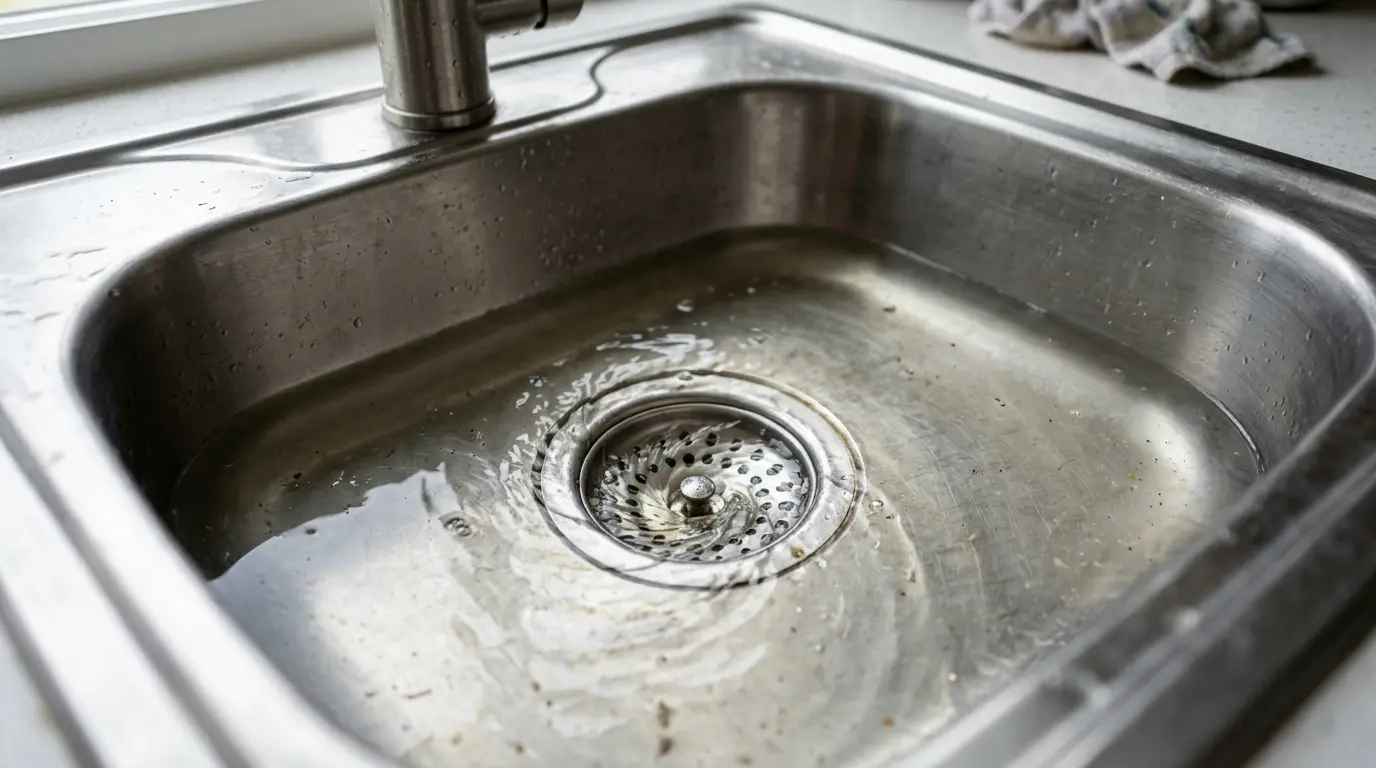
- Water pools in the sink basin and drains noticeably slower than usual
- A gurgling sound comes from the drain after the sink empties
- A faint sour or sewer-like smell lingers around the sink area
- The garburator hums or runs but the sink still doesn’t drain
- Water backs up into the dishwasher or a connected drain when the sink is used
What Causes a Kitchen Sink to Clog in Oakville Homes
Most kitchen sink clogs we see across Oakville trace back to one of these:
- Cooking grease and fat — poured down the drain while still warm, it cools and hardens inside the pipe, catching everything that flows past it afterward
- Food particles and coffee grounds — small enough to slip past the strainer but not small enough to actually flow through the trap
- Soap residue mixed with hard water minerals — Oakville’s hard water reacts with soap to form a sticky scale that narrows the drain over time
- A failing or clogged garburator — food waste that isn’t ground finely enough can settle and block the line just past the disposal unit
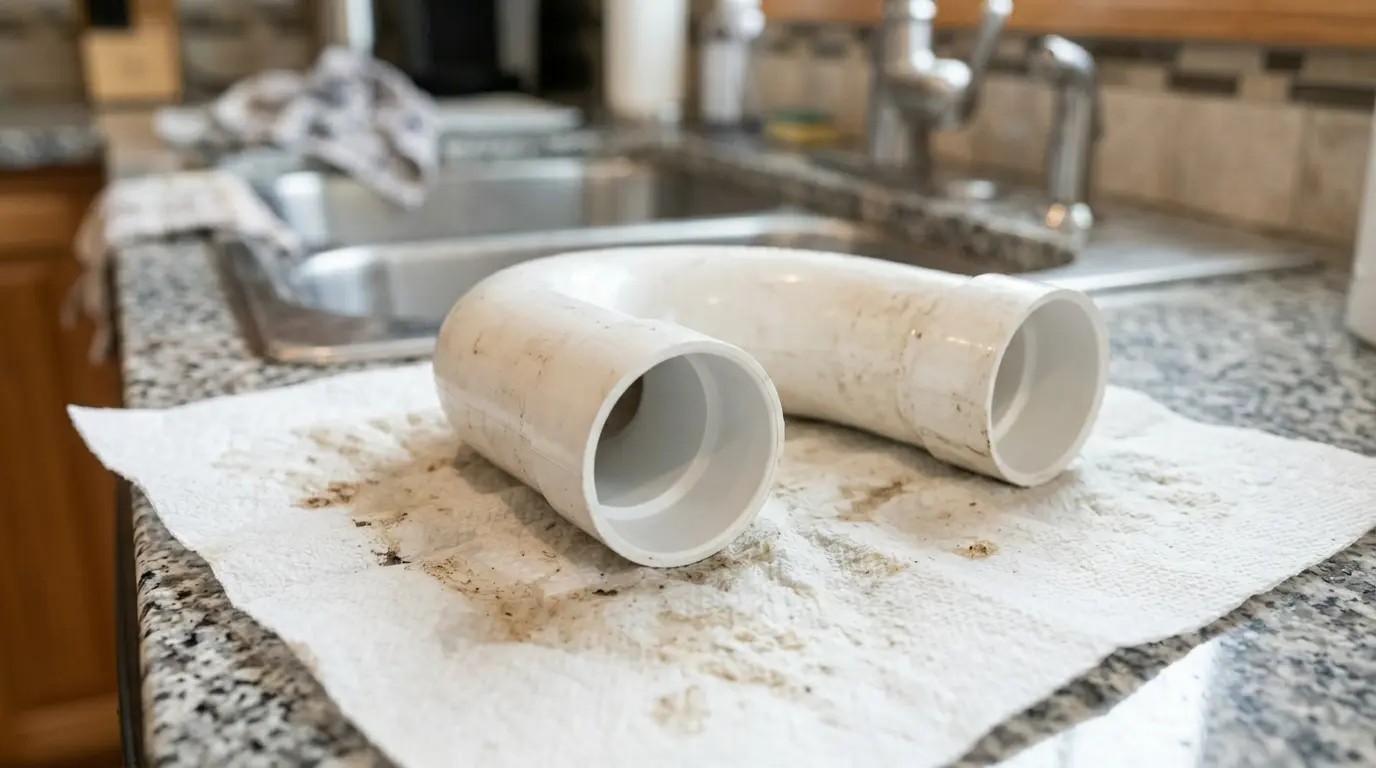
- A blocked P-trap — the curved pipe under the sink is designed to catch debris, and it’s also the most common place a clog actually sits
- A deeper drain line issue — less common, but if multiple fixtures are affected together, the problem may be further down than the kitchen sink itself
Safe DIY Checks Before You Call a Plumber
These steps are safe for most homeowners to try first, and they resolve a good share of kitchen sink clogs without needing a service call.
🚨 Avoid pouring chemical drain cleaners down an already slow drain. They can damage older pipes, and if the clog doesn’t fully clear, the standing chemical liquid becomes a hazard for whoever works on the pipe next.
When to Stop DIY and Call a Licensed Plumber
- The clog returns within a few days after clearing it yourself
- Plunging and the P-trap check didn’t resolve the slow drain
- More than one drain in the home is backing up at the same time
- You notice a persistent sewer smell along with the slow drain
- The garburator runs but the sink still won’t drain properly
For situations where multiple drains are affected at once, treat it as urgent — our emergency repairs team can respond quickly to prevent backup or water damage.
How Professionals Diagnose a Stubborn Kitchen Sink Clog
A licensed plumber works through a stubborn clog methodically rather than guessing at the first likely cause:
- Inspecting and clearing the P-trap and the section of pipe directly behind it
- Running a drain snake to locate a blockage further down the line and estimate its distance from the sink
- Using a camera inspection on older lines to check for grease buildup, cracks, or a deeper blockage
- Checking whether the clog is isolated to the kitchen sink or shared with other fixtures on the same line
This order matters because it avoids unnecessary work. There’s no point running a camera inspection on a line that just needed its P-trap cleaned, and there’s no point repeatedly plunging a sink when the actual blockage sits ten feet down the drain line, well past where a plunger’s pressure can reach.
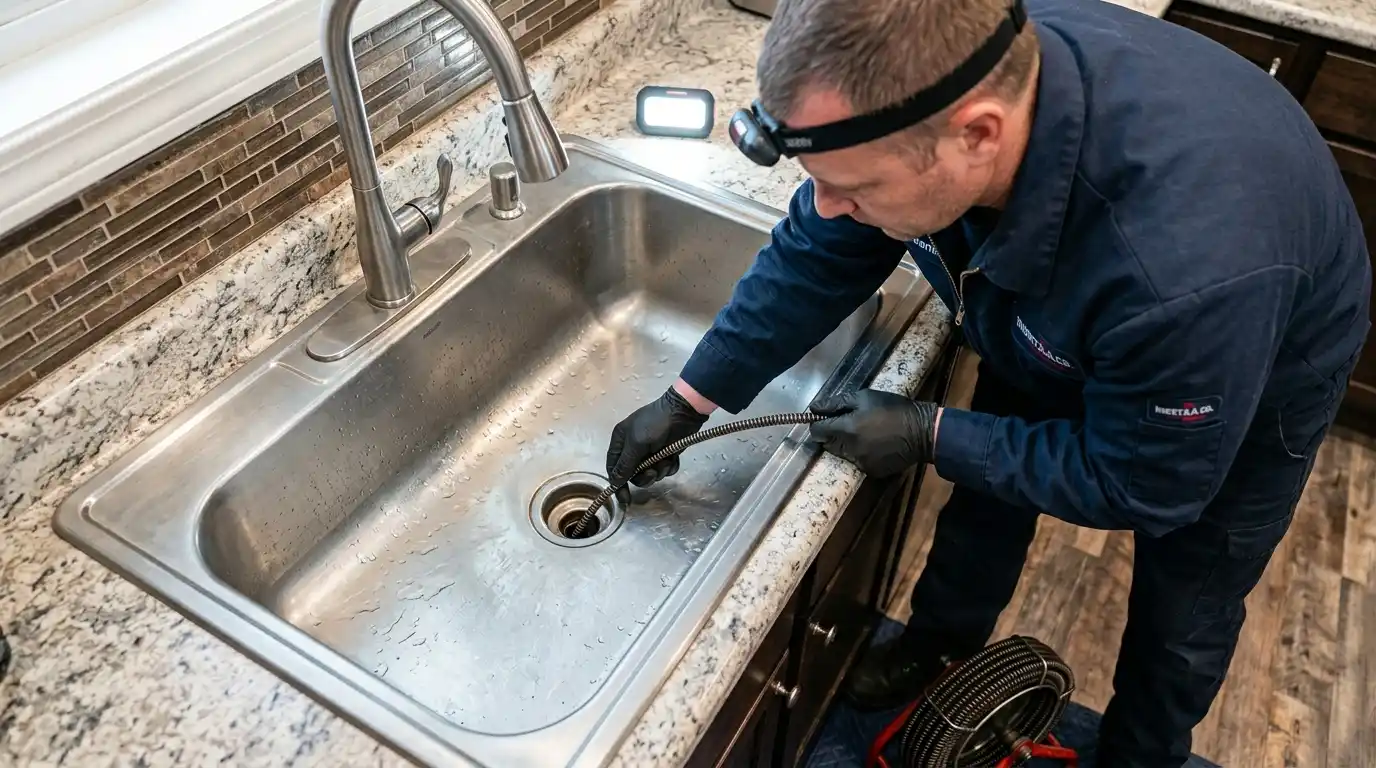
This step-by-step process avoids repeating the same temporary fix and targets the actual cause instead. For deeper drain issues, our professional drain cleaning in Oakville service clears grease buildup and blockages that a plunger alone can’t reach.
Cost Factors for Kitchen Sink Drain Repairs
Costs vary depending on what’s actually causing the clog:
| Cause | Typical Fix | Relative Cost |
|---|---|---|
| Light grease or soap buildup | Hot water flush or plunging | Lowest — often a DIY fix |
| Blocked P-trap | Cleaning or trap replacement | Low — quick visit |
| Failing garburator | Repair or replacement | Moderate |
| Deeper drain line blockage | Drain snaking or hydro jetting | Moderate to higher, depending on access |
| Recurring multi-fixture backups | Camera inspection and line repair | Higher, but prevents repeat callouts |
For a broader breakdown of typical plumbing repair pricing in Oakville, our guide to plumbing costs in Oakville walks through what affects pricing across different repair types. A plumber can give you an accurate number once the cause is confirmed, not before guessing at what’s behind a specific clog.
Quick DIY Fix Likely
- Clog tied to a specific recent event, like cooking
- Only the kitchen sink is affected
- Plunging or a hot water flush makes noticeable progress
Worth Calling a Plumber
- Clog keeps returning within days
- Multiple drains are affected together
- DIY checks made no difference at all
How to Prevent Kitchen Sink Clogs From Coming Back
- Let grease and cooking fat cool and solidify, then scrape it into the trash instead of the sink
- Use a sink strainer to catch food particles and coffee grounds before they reach the drain
- Run hot water for a few seconds after using the sink to help flush away light residue
- Avoid relying on chemical drain cleaners as a regular habit, since they can damage pipes over time
- Book a periodic drain cleaning if your home has older cast iron or galvanized drain lines
None of these habits take more than a few extra seconds, but together they make a real difference. Most of the repeat kitchen sink clogs we see in Oakville homes come down to one or two of the habits above slipping over time, not a sudden change in the plumbing itself.
📞 Need help today? Call +1 365 808 5310 or request a free plumbing estimate.
Areas We Serve Near Oakville
Oakville Plumbing Pro provides residential and commercial plumbing support across Oakville and nearby communities, including Burlington, Mississauga, Glen Abbey, Bronte, Joshua Creek, Clearview, and Downtown Oakville, with 24/7 emergency support for urgent backups. You can see our full range of plumbing services if you’re dealing with a related drain issue elsewhere in the home.

Frequently Asked Questions
Why does my kitchen sink clogged Oakville plumbers see most often happen with grease?
Grease and cooking fat are liquid when warm but harden as they cool inside the pipe, catching food particles and soap residue that flow past afterward. Over time this buildup narrows the drain until it clogs completely.
Is it safe to use chemical drain cleaners on a kitchen sink clog?
Occasional use on a minor clog is generally low-risk, but regular use can damage older pipes and isn’t recommended as a habit. If a clog doesn’t clear after one attempt, switch to mechanical methods or call a plumber instead of repeating the chemical treatment.
Why does my garburator hum but the sink still won’t drain?
A humming garburator usually means the motor is running, but the blockage sits in the pipe just past the disposal unit rather than inside the unit itself. This typically needs a drain snake to clear properly.
How much does it cost to fix a clogged kitchen sink in Oakville?
It depends on the cause. A simple plunge or hot water flush costs nothing beyond your time, while drain snaking, hydro jetting, or garburator replacement cost more. A plumber can give an accurate estimate once the cause is confirmed.
Is a clogged kitchen sink an emergency?
A single slow kitchen sink usually isn’t urgent. It becomes more pressing if water is backing up into other fixtures, or if standing water in the sink is preventing you from using it at all for an extended time.
Can I prevent kitchen sink clogs without changing my habits much?
Yes — the biggest improvement usually comes from two small changes: scraping grease into the trash instead of the sink, and using a strainer to catch food particles before they reach the drain.
Why does my clog keep coming back after I clear it?
A clog that returns within days usually means the blockage sits further down the drain line than a plunger or P-trap cleaning can reach. A drain snake or professional drain cleaning typically resolves this for good.
Should I worry if more than one drain is backing up at once?
Yes — that pattern usually points to an issue in the shared drain line rather than the kitchen sink alone, and it’s worth having a licensed plumber inspect it before the situation gets worse.
Tired of the Same Kitchen Sink Clog Coming Back?
Free Estimate · Drain Snake & Camera Inspection Available · Licensed & Insured
📞 Call (365) 808-5310