Why Polybutylene Pipes Fail
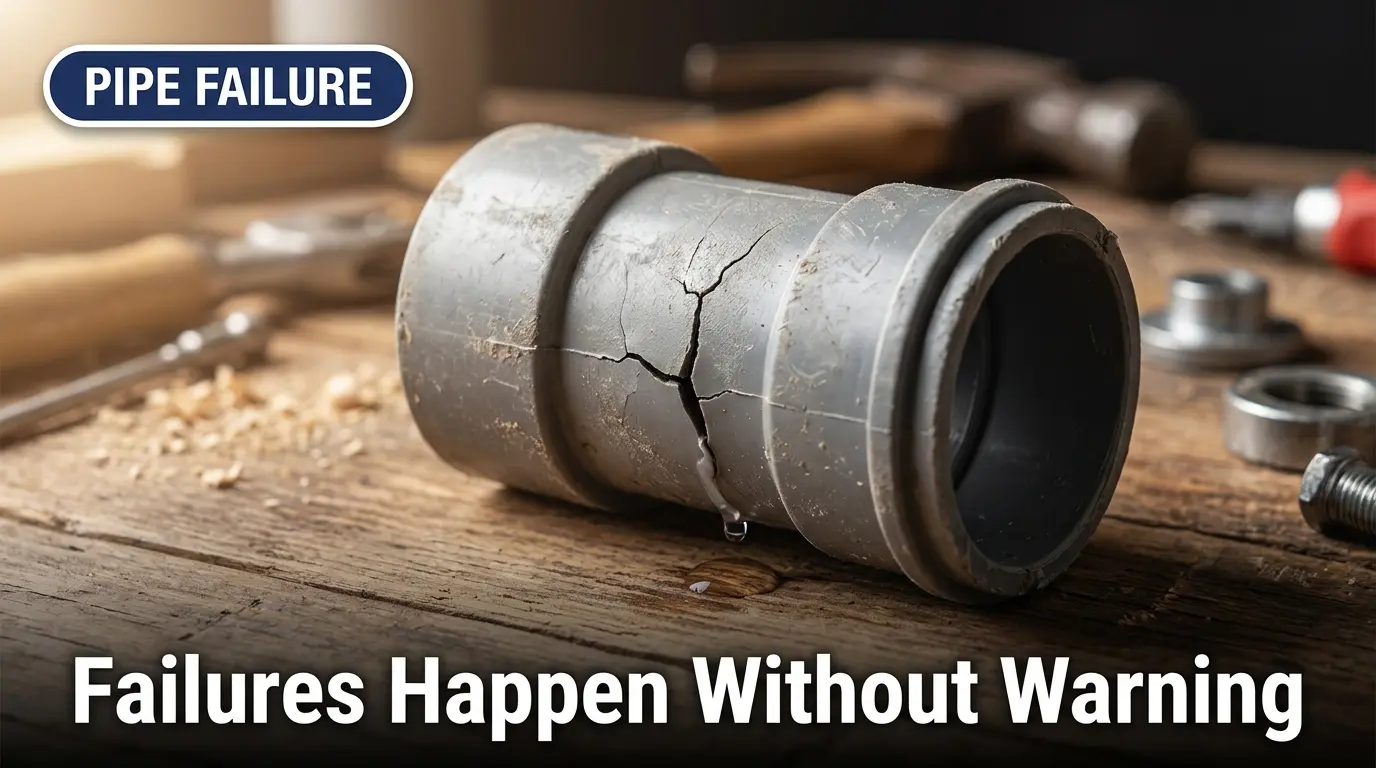
The core issue is chemical, not mechanical. Chlorine and other oxidants commonly used to treat municipal water react with the polybutylene resin over years of exposure, causing tiny cracks to form inside the pipe wall that aren’t visible from the outside. The pipe can look completely fine right up until internal degradation reaches a point where pressure causes it to split.
This is what makes polybutylene different from most plumbing problems. A failing copper pipe usually gives some warning — a small drip, a stain, a slow weep at a joint. Polybutylene often doesn’t. The most common cause of a poly-B failure is years of gradual, invisible internal breakdown that finally gives out all at once, frequently at a fitting where stress concentrates.
Fittings tend to fail before the straight runs of pipe do, since connection points already carry mechanical stress from the original installation, and that stress compounds with the chemical degradation happening inside the material. This is part of why some homes see a fitting fail at one location while the rest of the system appears to hold up fine for years afterward — it’s rarely an indication that the rest of the piping is safe, just that it hasn’t reached its breaking point yet.
Water temperature and pressure also play a role in how quickly degradation progresses. Hot water lines generally degrade faster than cold water lines because heat accelerates the chemical reaction between the resin and the oxidants in the water supply. That’s part of why a water heater connection or a hot water line feeding a second-floor bathroom is statistically a more likely first failure point than a cold water line in a basement.
Key Takeaways
- Polybutylene was used in homes built or re-plumbed roughly between 1978 and 1995.
- It breaks down internally from chlorine exposure, often without visible warning signs.
- There’s no reliable repair for the material itself — full replacement is the standard fix.
- Many home insurers in Ontario are aware of polybutylene and may ask about it directly.
- A licensed plumber can confirm the material and assess your home’s risk in a single visit.
What You Can Safely Check Yourself
🚨 If you confirm polybutylene piping, avoid disturbing the pipe unnecessarily. Repeated flexing or stress at fittings can accelerate failure in pipe that’s already chemically weakened.
None of these checks tell you how much life is left in the pipe — only a licensed plumber’s assessment can speak to actual condition. What a homeowner-level check does give you is enough information to have an informed conversation when you do call a professional, rather than starting from zero.
When to Stop Guessing and Call a Licensed Plumber
A homeowner can usually identify the material, but confirming the actual condition of the piping, and deciding on next steps, needs a professional assessment. Call a licensed plumber if any of the following apply:
- You’ve confirmed or strongly suspect polybutylene piping in your home
- You’re planning to sell and want documentation of your plumbing material before listing
- Your insurer has asked directly about polybutylene piping in your policy renewal
- You’ve already had one unexplained leak or pipe failure
- You’re renovating a kitchen or bathroom and want piping addressed at the same time
For an active leak or sudden pipe failure, this becomes a priority call rather than something to schedule around — our emergency repairs team can respond quickly across Oakville.
How Professionals Confirm and Replace It
A licensed plumber typically starts with a visual confirmation at multiple accessible points throughout the home, since some homes have a mix of materials from past partial repairs. Once polybutylene is confirmed, the conversation shifts to scope: is this a full re-pipe of the home, or can sections be addressed individually as part of a longer-term plan?
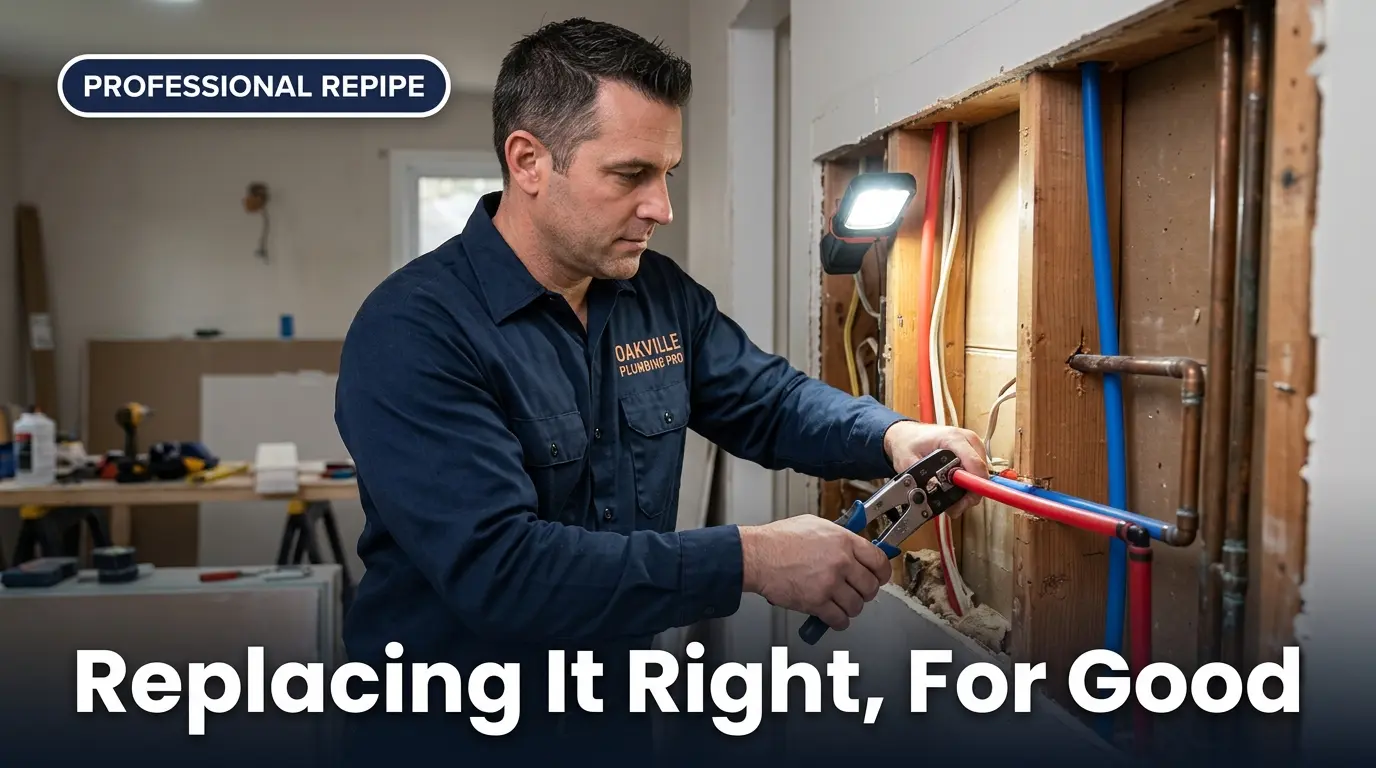
Full replacement involves removing the existing polybutylene lines and installing copper or PEX piping in their place. PEX has become the more common choice for whole-home re-pipes because it’s flexible enough to route through existing wall and floor cavities with less demolition than copper requires, while still offering decades of reliable service life. For related plumbing work uncovered during a re-pipe, like aging fixture connections or valve replacements, our team also handles general pipe fixing and replacement.
If the home has had any unexplained dampness, stains, or musty smells that haven’t been traced to an obvious source, it’s worth pairing a re-pipe assessment with professional leak detection, since a slow polybutylene failure inside a wall can sometimes go unnoticed for longer than homeowners expect.
DIY vs Professional: Why This Isn’t a DIY Fix
It’s worth being direct about this one: replacing polybutylene piping is not a reasonable do-it-yourself project, even for homeowners comfortable with basic plumbing repairs. The risk isn’t the skill level required to cut and join new pipe — it’s everything around that work. A whole-home or partial re-pipe involves working safely around live electrical wiring inside walls, understanding which sections of a home’s plumbing system are load-bearing or fire-rated assemblies, and sequencing the shutoff and reconnection of water service without leaving the home without water for longer than necessary.
There’s also a permitting and inspection angle that DIY repairs miss entirely. Significant plumbing work in Ontario is subject to building code requirements, and a re-pipe done without the right permits can create complications later, particularly during a home sale when a buyer’s lawyer or inspector asks for documentation of major plumbing work. A licensed plumber handles that side of the job as a matter of course, which is part of what’s actually being paid for beyond the labour itself.
Cost Factors for Replacement in Oakville
Pricing depends heavily on the scope of the job and how accessible the existing piping is.
| Scope | What Affects the Price |
|---|---|
| Single section replacement | Pipe length, wall access, fixture count affected |
| Partial home re-pipe | Number of affected rooms, finished vs. unfinished walls |
| Full home re-pipe | Home size, number of bathrooms, wall and floor access, material choice (PEX vs. copper) |
A full re-pipe is a significant investment, but it’s also a one-time fix rather than a recurring repair bill. Homeowners sometimes compare the cost of a full re-pipe against the cumulative cost of repeated emergency repairs over several years if they choose to wait, which can shift the math more than expected once a few unplanned call-outs are factored in. For a general sense of how plumbing pricing works across different job types in Oakville, our plumber cost guide breaks down typical ranges. A licensed plumber should always provide a firm, written estimate on-site before any work begins.
Insurance and Resale Considerations

Polybutylene piping has become enough of a known issue in the insurance industry that some Ontario insurers now ask about it directly during underwriting or renewal, particularly for older homes. A confirmed poly-B installation can affect premiums in some cases, and a documented professional assessment can help homeowners respond to those questions with accurate information rather than guesswork.
The same logic applies to resale. Buyers and their inspectors are increasingly aware of polybutylene as a red flag, and an unresolved poly-B system can become a negotiating point during a sale. Homeowners planning to sell in the next few years sometimes choose to address the piping proactively rather than have it surface as a surprise during a buyer’s inspection.
For homeowners not planning to sell anytime soon, the calculation is a bit different but still worth thinking through. Replacement is a meaningful upfront cost, but it removes an open-ended risk that has no predictable timeline. A pipe that’s degrading internally could fail next month or hold on for several more years — there’s genuinely no reliable way to know in advance, which is exactly why insurers treat it as a flagged risk rather than something to monitor and ignore.
Reducing Risk While You Plan Replacement
Full replacement is the only real fix, but a few habits can reduce risk in the meantime if you’re not ready to re-pipe immediately. Think of these as risk management rather than a solution — they buy time and reduce the odds of a worst-case scenario, but they don’t change the underlying condition of the pipe.
- Know exactly where your main water shutoff is so you can act fast if a section fails
- Avoid unnecessary work on exposed polybutylene sections, like moving or flexing pipe during unrelated renovations
- Have a licensed plumber inspect fittings periodically, since failures often start at connection points
- Budget for replacement in phases if a full re-pipe isn’t financially realistic right away, starting with the areas most prone to damage if they fail, like above finished basements
💡 Not sure what’s behind your walls? A licensed plumber can confirm your pipe material and walk you through realistic options for your specific home. View our full range of plumbing services or request a free estimate to get started. We also serve older-home neighbourhoods like Bronte, where this issue comes up often.
Frequently Asked Questions — Polybutylene Pipes in Oakville
What years were polybutylene pipes commonly used?
Polybutylene was widely used in residential construction from the late 1970s through the mid-1990s, after which it was largely phased out in favour of CPVC and later PEX piping.
How do I know if my Oakville home has polybutylene pipes?
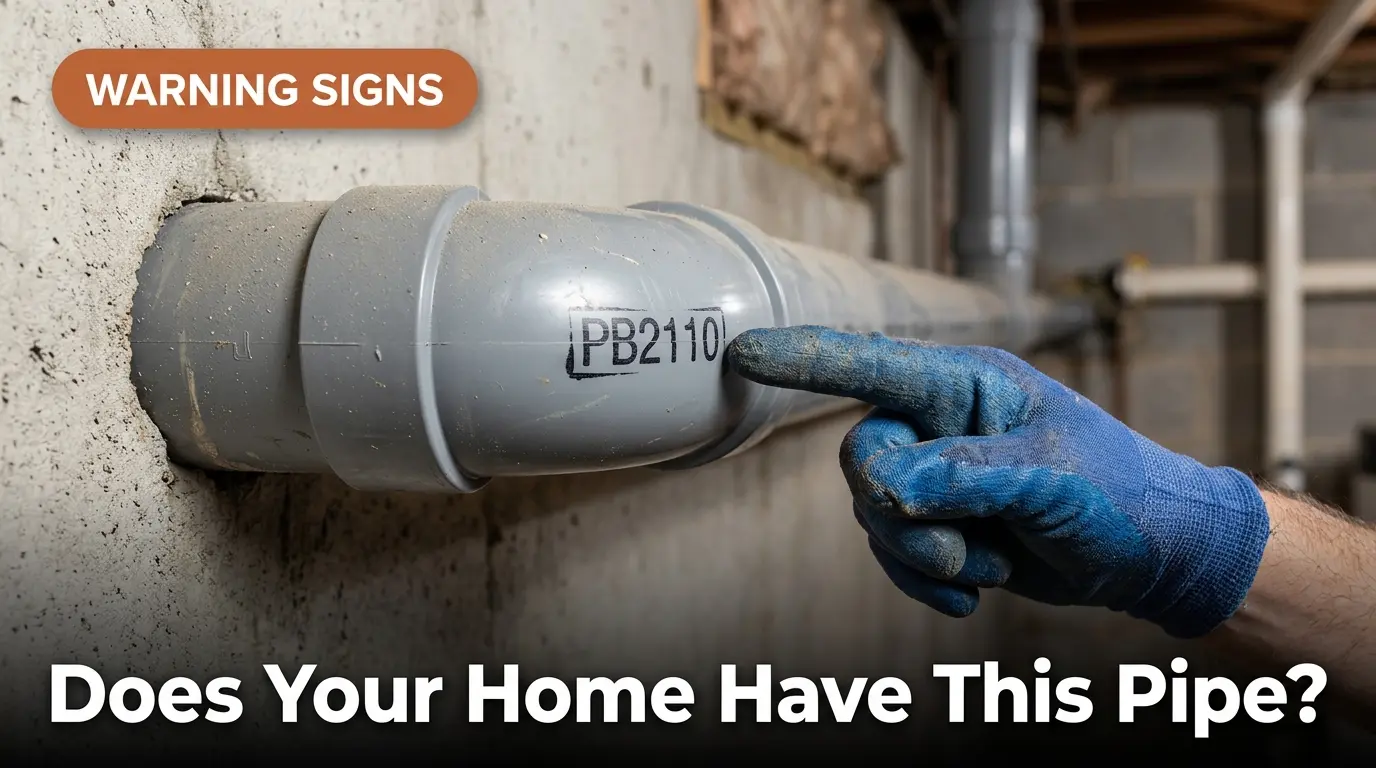
Check the build year, look for grey plastic pipe at the main shutoff valve, and check for a “PB2110” stamp along the pipe. A licensed plumber can confirm the material definitively during a quick inspection.
Can polybutylene pipes be repaired instead of replaced?
Not reliably. The degradation happens inside the pipe wall itself, so patching a single failure point doesn’t address the rest of the system. Full replacement with copper or PEX is the standard long-term fix.
How much does it cost to replace polybutylene pipes?
Cost depends on whether the job is a single section, a partial re-pipe, or a full home re-pipe, plus wall access and material choice. A licensed plumber can provide an accurate written estimate after assessing your home.
Does polybutylene piping affect home insurance in Ontario?
It can. Some insurers ask about polybutylene piping during underwriting or renewal for older homes, and a confirmed installation may affect premiums in some cases. A professional assessment helps homeowners answer those questions accurately.
Is a polybutylene pipe failure an emergency?
Yes, treat a sudden leak or burst from polybutylene piping as an emergency. These failures can happen with little warning and release significant water quickly, so shutting off the main valve and calling a plumber right away is the priority.
Will replacing polybutylene pipes help when selling my home?
It can. Buyers and home inspectors increasingly recognize polybutylene as a concern, and a documented replacement removes it as a negotiating point during a sale.
Is PEX a good replacement for polybutylene pipe?
Yes. PEX is the most common modern replacement because it’s flexible enough to route through existing wall cavities with less demolition than copper, while still offering a long, reliable service life and broad availability of fittings for future repairs.
Think Your Home Might Have Polybutylene Pipes?
Free Assessment · Licensed & Insured · Honest, Written Estimates
📞 Call (365) 808-5310